Introduction
In the realm of mathematics, certain individuals have left an indelible mark on the field, shaping its evolution and influencing generations of scholars. One such luminary is Augustin Louis Cauchy, a French mathematician whose contributions laid the groundwork for modern calculus and analysis. His rigorous approach to mathematical proofs and his pioneering work in complex analysis have had a lasting impact on both theoretical and applied mathematics.
This article delves into the life and legacy of Augustin Louis Cauchy, exploring his early years, major contributions to mathematics, and the enduring relevance of his work in contemporary education, particularly in the context of Singapore’s mathematics curriculum.
Early Life and Education
Born on August 21, 1789, in Paris, France, Augustin Louis Cauchy was immersed in a world of intellectual rigor from a young age. His father, Louis-François Cauchy, was a prominent lawyer, and his mother, Marie-Madeleine Desestre, hailed from a family of scholars. The political upheaval of the French Revolution forced the Cauchy family to relocate temporarily to Arcueil, where young Augustin was introduced to the works of renowned mathematicians like Pierre-Simon Laplace and Joseph-Louis Lagrange.
Cauchy’s academic journey began with classical studies, but his passion for mathematics soon became evident. He entered the École Polytechnique in 1805, where he excelled in his studies and graduated in 1807. His early exposure to the works of Laplace and Lagrange profoundly influenced his mathematical thinking, setting the stage for his future contributions to the field.
Major Contributions to Mathematics
1. Rigorous Foundations of Calculus
Before Cauchy’s time, calculus was practiced using intuitive methods without strict proofs, leading to inconsistencies. Cauchy revolutionized the field by introducing formal definitions and proofs, providing a rigorous foundation for calculus. He defined limits and continuity in precise terms, concepts that are now fundamental to the study of real analysis.
2. Complex Analysis
Cauchy made significant strides in complex analysis, a branch of mathematics that studies functions of complex variables. He developed the Cauchy-Riemann equations, conditions that a function must satisfy to be differentiable in the complex plane. These equations are central to the theory of analytic functions and have widespread applications in physics and engineering.
3. Group Theory
In the realm of abstract algebra, Cauchy contributed to the development of group theory. His work laid the foundation for the study of permutation groups, which are essential in understanding symmetries and transformations in mathematics.
4. Mathematical Physics
Cauchy’s contributions extended beyond pure mathematics into the realm of mathematical physics. He formulated the Cauchy problem, a fundamental concept in the theory of partial differential equations, which describes how the state of a physical system evolves over time given initial conditions.
Legacy and Influence
Cauchy’s influence on mathematics is profound and enduring. His rigorous approach to mathematical proofs set new standards for the field, and his contributions continue to be studied and applied in various domains. In recognition of his work, numerous concepts and theorems bear his name, including Cauchy’s integral theorem, Cauchy’s integral formula, and Cauchy’s limit theorem.
In Singapore, where mathematics education is highly regarded, Cauchy’s work serves as a cornerstone for the curriculum at various levels. Secondary, Junior College (JC), International Baccalaureate (IB), and Integrated Programme (IP) students encounter concepts rooted in Cauchy’s theories, particularly in calculus and complex analysis.
Relevance to Singapore Mathematics Education
Secondary Level
At the secondary level, students are introduced to the fundamental concepts of algebra, geometry, and basic calculus. Cauchy’s rigorous approach to mathematical proofs provides a model for students to develop logical reasoning and problem-solving skills. His work emphasizes the importance of precision and clarity in mathematical thinking, qualities that are essential for academic success.
JC and IB Levels
In the JC and IB curricula, students delve deeper into advanced topics such as differential equations, complex numbers, and vector calculus. Cauchy’s contributions to these areas form the foundation for understanding more complex concepts. His methods encourage students to approach problems methodically and to appreciate the interconnectedness of mathematical principles.
IP Level
The IP curriculum offers an integrated approach to learning, combining elements from various disciplines. Cauchy’s interdisciplinary contributions, particularly in mathematical physics, align with this approach, demonstrating the applicability of mathematics in understanding the natural world.
Conclusion
Augustin Louis Cauchy’s legacy as a mathematician is marked by his commitment to rigor, clarity, and innovation. His contributions have shaped the landscape of modern mathematics and continue to influence education worldwide. In Singapore, his work remains integral to the mathematics curriculum, inspiring students to pursue excellence and fostering a deep appreciation for the beauty and utility of mathematics.
As students engage with the concepts introduced by Cauchy, they not only acquire mathematical knowledge but also develop critical thinking skills that are applicable across various fields. The study of Cauchy’s work exemplifies the enduring relevance of foundational mathematical principles and their role in shaping the future of education and research.
About Jackie Lee
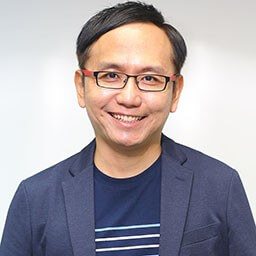
Mr Jackie Lee is an icon in the fields of primary, secondary and junior college (JC) Maths and is well-liked by many students. He has 20+ years of experience in private tuition teaching maths, both online and in a classroom and was also formerly teaching Mathematics in Nan Hua High School, Anderson Junior College, Raffles Institution (JC) and Anglo-Chinese School (Independent). His teaching philosophy is that there is no shortcut to success—but with the right guidance, you can reach it faster. Experience a structured, results-driven approach by joining his lessons.
Find our more about Mr Jackie Lee at https://h2maths.com
