Singapore’s mathematics education system is often regarded as one of the most rigorous and effective globally. Junior College (JC) students, in particular, face the demanding H2 Maths syllabus, which prepares them for university-level mathematics in calculus, algebra, and statistics. As competition intensifies, students increasingly turn to specialised tuition services like those offered by Perfect Solution Education Group (www.h2maths.com), a leading maths tuition centre in Singapore providing both 1-to-1 and group tuition at Secondary, IP, JC, and IB levels.
While modern maths tuition often focuses on contemporary techniques and exam-oriented problem-solving, historical figures such as Zhang Heng provide meaningful context and depth to the subject. Zhang Heng, a 2nd-century Chinese polymath, is best known for inventing the world’s first seismoscope. His legacy offers valuable insights into mathematical thinking and scientific problem-solving—qualities that are central to excelling in JC-level mathematics.
Zhang Heng: Mathematician, Engineer, and Innovator
Zhang Heng (78–139 AD) was a scholar, astronomer, engineer, and mathematician during China’s Eastern Han dynasty. His contributions to science and technology were groundbreaking, particularly his invention of the seismoscope in 132 AD, which could detect distant earthquakes. His work exemplifies analytical thinking, innovation, and the early application of mathematical principles to solve real-world problems.
In JC H2 Maths tuition, where students grapple with abstract mathematical models, mechanics, and data analysis, Zhang Heng’s approach mirrors the skillset required today. He embodied the ability to observe, model, and interpret the physical world—skills that are nurtured in advanced Singapore Maths tuition programmes.
The Seismoscope: An Ancient Masterpiece of Engineering
The seismoscope developed by Zhang Heng is widely considered the first instrument capable of detecting and indicating seismic activity. The device consisted of a large bronze vessel surrounded by eight dragon heads, each holding a ball in its mouth. When an earthquake occurred, an internal pendulum mechanism would trigger one of the balls to fall, pointing in the direction of the earthquake’s origin. The ball would drop into the mouth of a corresponding toad sculpture below.
Although the instrument could not measure the magnitude of a quake, it was able to detect tremors occurring hundreds of kilometres away. This feat was confirmed when a dropped ball indicated seismic activity, and days later, messengers reported that an earthquake had indeed occurred in the direction the ball had fallen.
The conceptual design of the seismoscope involves several mathematical principles. It required an understanding of radial symmetry (the eight directions), forces and motion (triggering the mechanism), and spatial geometry. These are areas covered extensively in JC Maths topics such as vectors, circular geometry, kinematics, and even elementary statistics.
Application to JC-Level Mathematics
Zhang Heng’s seismoscope offers a multidisciplinary case study that aligns with the JC H2 Maths syllabus. It serves as a tangible example of how mathematics can model and predict natural phenomena. Tuition centres that leverage such historical innovations provide students with a richer learning experience, reinforcing core syllabus topics through real-world analogies.
Mechanics and Kinematics: The seismoscope mechanism relates closely to Newtonian mechanics, a key part of the JC H2 Maths syllabus. Students can analyse the internal pendulum system using equations of motion and model the triggering of the ball drop as a function of gravitational force and acceleration. This provides a real-world scenario for applying mechanics principles beyond textbook problems.
Geometry and Spatial Reasoning: The circular placement of dragon heads involves angular separation and radial symmetry. With eight directions, students can calculate central and inscribed angles, which is highly relevant to trigonometry and coordinate geometry—both essential topics in JC Maths.
Statistics and Data Interpretation: The directional data produced by the seismoscope mimics discrete data collection, allowing students to explore probability models or develop estimation techniques. This can be integrated into lessons on statistical distributions, hypothesis testing, and error analysis.
Integrating Historical Context in Maths Tuition
Incorporating historical mathematical inventions like the seismoscope into JC-level tuition offers several pedagogical benefits. Firstly, it enhances engagement. Students often find abstract mathematical theory more relatable when it is grounded in narrative and real-life application. Secondly, it improves retention. Lessons that connect new concepts to memorable stories or inventions create stronger cognitive associations. Finally, it nurtures analytical thinking. Analysing historical devices encourages students to question, model, and derive conclusions—fundamental skills for success in mathematics.
Tutors at Perfect Solution Education Group integrate such contexts into their JC H2 Maths tuition through enrichment activities and applied problem sets. For instance, a lesson on mechanics might begin by examining how Zhang Heng’s seismoscope operates, followed by guided derivations of force equations or angular velocity related to the pendulum trigger.
Personalised and Group Tuition Approaches
Perfect Solution Education Group offers both 1-to-1 and group tuition sessions, each structured to reinforce core mathematical competencies while allowing flexibility to explore enriching topics like Zhang Heng’s seismoscope.
In 1-to-1 tuition, students receive highly customised instruction. Tutors can introduce historical case studies like Zhang Heng’s invention in greater depth, linking them directly to the student’s current syllabus. This setting is ideal for students who need tailored support in areas like mechanics, statistics, or abstract algebra.
In group tuition, collaborative discussion allows for collective exploration of applied maths problems. A group setting encourages debate and peer learning, useful when modelling real-world systems such as seismic detectors. Tutors can design group activities where students construct simple mechanical models or analyse data sets derived from hypothetical seismoscope readings.
Relevance to the Singapore Curriculum
Singapore’s JC H2 Mathematics syllabus requires students to master both pure and applied mathematics. Topics such as functions, vectors, calculus, differential equations, and statistical inference are essential for university readiness. Integrating ancient mathematical thinking provides a holistic learning experience that connects technical skills with historical and cultural awareness.
Zhang Heng’s legacy is particularly suited to the IP and JC curricula, which emphasise higher-order thinking and interdisciplinary application. At the IB level, where Theory of Knowledge (TOK) and cultural perspectives are embedded, using examples like the seismoscope supports international-mindedness and academic depth.
Curriculum Themes Aligned with the Seismoscope
| JC/IP/IB Topic Area | Application through Zhang Heng’s Seismoscope |
| Circular Geometry | Understanding of symmetry and angular positioning of the eight-direction layout |
| Mechanics | Modelling of force and motion in the triggering system |
| Data Interpretation | Decoding direction of seismic activity based on discrete ball-drop outcomes |
| Statistics | Modelling detection probabilities and error margins in seismic readings |
| Mathematical Modelling | Translating physical mechanisms into mathematical equations and simulations |
Enhancing Problem-Solving through Case Studies
Perfect Solution Education Group utilises historical case studies as a tool to develop exam-level problem-solving. For example, JC students may be tasked to calculate the minimum seismic acceleration needed to dislodge a 0.2 kg bronze ball from a 15 cm-long lever. Alternatively, students may interpret mock directional data from eight detectors to estimate the direction and magnitude of a hypothetical earthquake. These types of activities strengthen analytical reasoning, a critical skill for A-Level success.
Choosing the Right JC Maths Tuition Centre
Selecting an appropriate tuition provider is critical for students aiming to excel in H2 Maths. Key considerations include curriculum alignment, pedagogical innovation, teaching qualifications, and academic results. Centres that offer interdisciplinary and enrichment opportunities—such as the integration of historical mathematical discoveries—provide a competitive edge.
Perfect Solution Education Group distinguishes itself through its JC-focused approach, experienced tutors, and proven track record of results. By incorporating content such as Zhang Heng’s contributions, the centre goes beyond rote learning to build deep mathematical understanding and intellectual curiosity.
Conclusion
Zhang Heng’s invention of the seismoscope reflects not only technical ingenuity but also the timeless power of mathematics to model and interpret the natural world. For students undertaking JC-level mathematics in Singapore, such historical innovations provide a meaningful context for learning complex mathematical concepts. Whether through 1-to-1 personalised sessions or structured group classes, Perfect Solution Education Group leverages the richness of ancient knowledge to enhance modern academic performance.
Through a balanced curriculum, real-world applications, and thoughtful enrichment, students can appreciate the beauty and utility of mathematics—not just as a school subject, but as a discipline that spans centuries and civilizations.
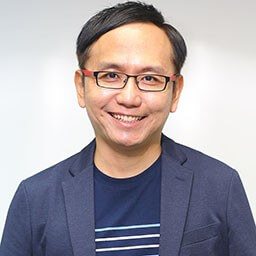
About Jackie Lee
Mr Jackie Lee is an icon in the fields of primary, secondary and junior college (JC) Maths and is well-liked by many students. He has 20+ years of experience in private tuition teaching maths, both online and in a classroom and was also formerly teaching Mathematics in Nan Hua High School, Anderson Junior College, Raffles Institution (JC) and Anglo-Chinese School (Independent). His teaching philosophy is that there is no shortcut to success—but with the right guidance, you can reach it faster. Experience a structured, results-driven approach by joining his lessons.
Find our more about Mr Jackie Lee at https://h2maths.com
